
STUDIO OF IDEAS
We have long been a practice guided by ideas that have a positive impact on humanity. Several main ideas have emerged after over two decades of exploration:
SECOND NATURE
Second Nature begins with design that mimics the natural world and its positive impact on our mental health (also known as biophilic design), and is environmentally sustainable. Yet Second Nature goes even further: we create new types of environments that inspire the sublime, one of the core characteristics to our relationship to nature. By doing so, we create a direct and healthy relationship to our cities and our world. We do this by having the built environment be something that appears to be grown from nature itself. Our studio is out to build natural formations wherever we go.
COMMUNITY WELLNESS
Causing communities is a central activity of our office, and requires us to be activist architects. In a culture that is increasingly mediated and dispersed, we connect people through what we build. The principal task of architects is not radical form-making but a radical rethinking of community and how it can advance the human condition. Sustainable communities lead to sustainable lifestyles, lead to a sustainable relationship to the Earth. By focusing on how environments cause communities, we can directly impact the health and wellness of people.
MAKERS AND DOERS
We make things: it connects us to our creative power, and keeps us inspired. We make things algorithmically, handmade, or a hybrid of the two. We take delight in the depth of real materials, and the wonder of multichromatic palettes. We also create places for “making” – be that to make a living, a cultural artifact, or a home. By exploring what it is to make, as well as just doing it, we have unique insights into how to bring to life the richness of experience.
Principal
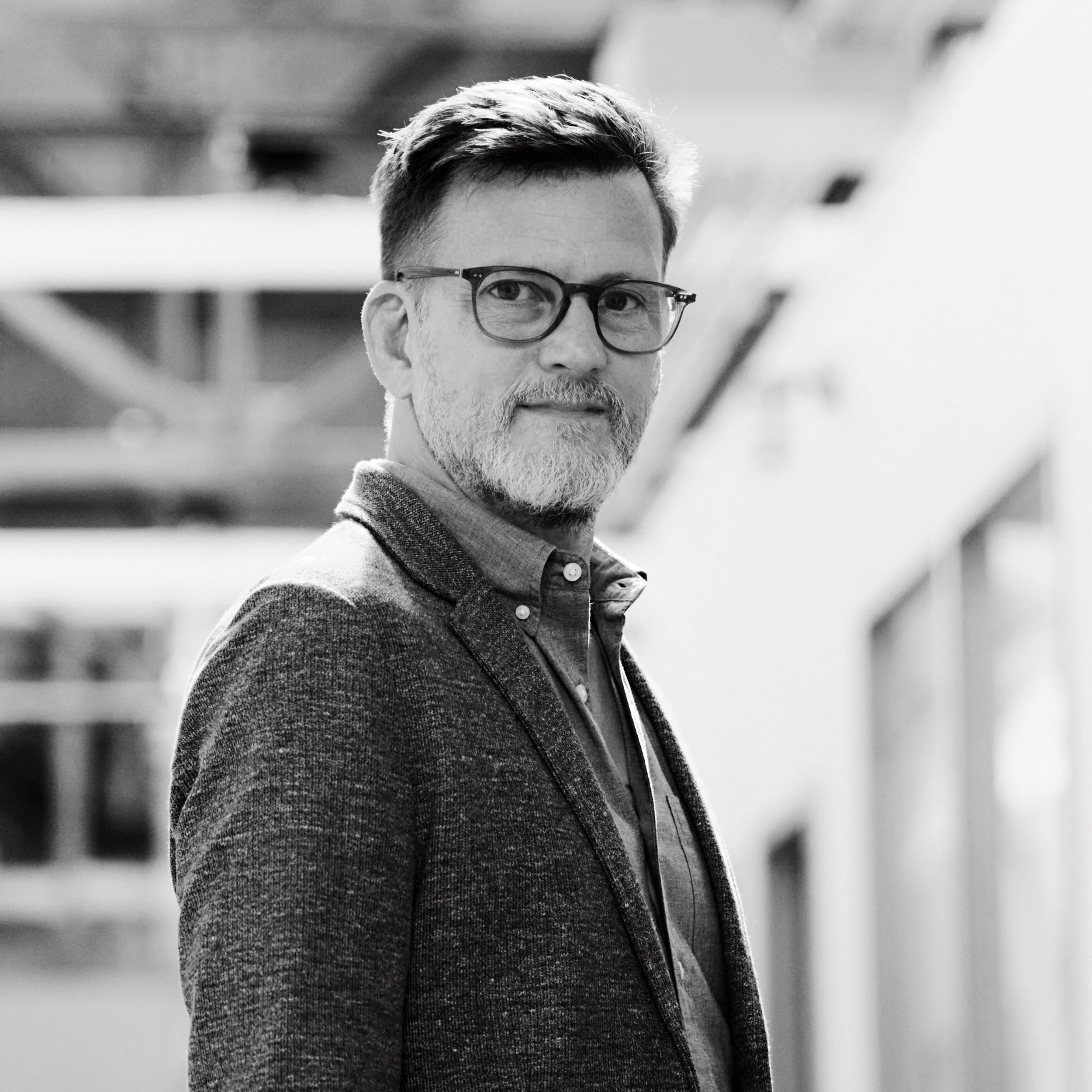
Chad Smith
Chad’s professional career has encompassed activities across the spectrum of practice: professional practice, community outreach, writing, lectures, conferences, teaching, digitally controlled fabrication, and project-based research. His work examines how the practice of architecture can influence culture, ecosystems, and making. The greatest impact of his work has been in the strengthening of communities, and in a rich body of applied material research.
He is a designer of award-winning projects, including a Progressive Architecture award for the design of the Performance Theater (at Karen Bausman and Associates in 1997). At Rogers Marvel Architects he won high-profile competitions, such as the Elevated Acre at 55 Water Street; has designed catalytic institutional projects, such as the master plan for The University of Georgia Lamar Dodd School of Art; and developed major brands, such as Kate Spade.
Since establishing Smith & Architects, he has developed a significant portfolio in projects that connect people to nature and empower communities. These include adaptive reuse projects in historical architecture, projects that rely on digitally crafted materials, as well as landscape projects. Recent projects include the Amsterdam Vale project in Manhattan and a water-directing house in Itapetinga, Brazil. While the firm has built extensively, it has also explored other ways of positively influencing culture, both through project-based research and by using the professional role of the architect to be a catalyst for healthy communities. He has also developed a parallel body of research projects including Park For Work, Second Nature Studios, and research into the connections between biophilic design and cultural production.
His applied research has been the topic for several lectures, conferences, and roundtables for both AIA NY and AIA NYS, particularly the research into how fitness communities form, and their impact on measurable health outcomes. Recent research includes how to build housing at the scale of the housing crisis, and research into robotic carving.
Chad is an Adjunct Assistant Professor of Architecture at Pratt Institute School of Architecture, Undergraduate Architecture Department. He has taught architecture design studio at Columbia University and has been on design juries at Columbia, Barnard, City College of New York, and Pratt Institute. He has been editor-in-chief of Tropolism.com, as well as a contributing writer to the USA Network’s Character Approved Blog, Curbed.com, and The Village Voice.
He received a Bachelor of Arts In Architecture from Washington University in Saint Louis, and a Master of Architecture degree from the Columbia University Graduate School Of Architecture, Planning, and Preservation.